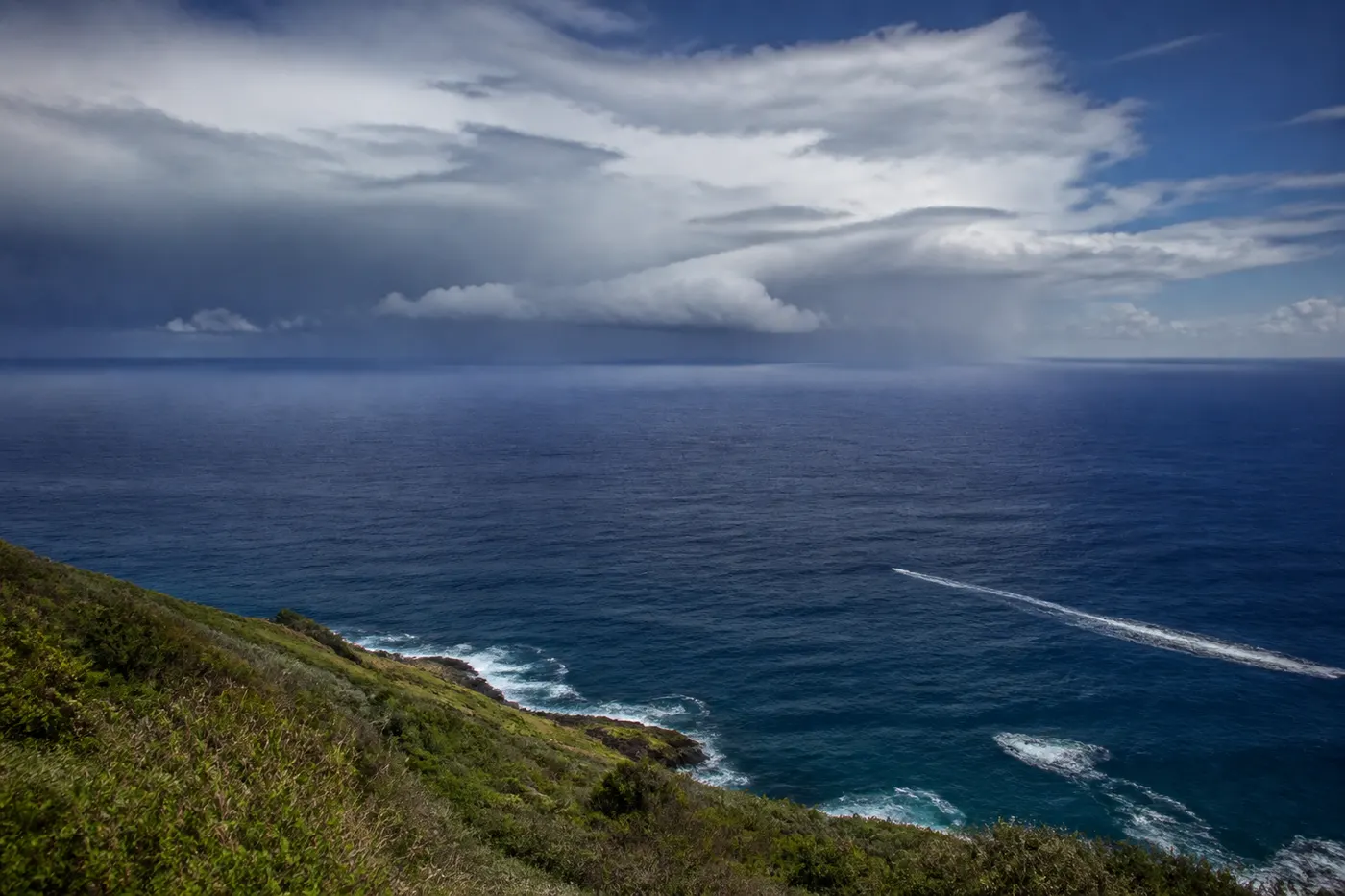
The most important update on Hurricane Lala is also the easiest to misread. Lala strengthened into a hurricane over the Central Pacific, but the latest official advisory did not report hazards affecting land in Hawaii. Those two facts can be true at the same time.
As of the 9 a.m. UTC advisory on Aug. 18, the storm was near 20.4N, 166.1W, moving west at about 10 mph. The advisory listed maximum sustained winds near 80 mph and said there were no coastal watches or warnings in effect. For most people on the main Hawaiian Islands, the practical takeaway is to follow local updates without treating the storm's name alone as a local warning.
What the latest advisory says
The Central Pacific Hurricane Center said Lala was expected to continue west on Tuesday, then turn west-northwest to northwest before turning north later in the week. The forecast showed additional strengthening during the next day or so.
The same advisory said hurricane-force winds extended outward up to 15 miles from the center and tropical-storm-force winds up to 90 miles. Those wind fields matter most for marine interests and the storm's forecast area, not as a blanket statement that every island is under dangerous conditions.
Does this mean Hawaii is in the clear?
There is no single statewide yes-or-no answer. The current land-hazard section is reassuring for the main islands, but weather products are location-specific and can change. People in Hawaii should check the NWS Honolulu hazards page and their county emergency-management guidance for any active rain, wind, flood, surf, or marine messages.
Visitors should also check their airline, airport, hotel, rental-car provider, and any inter-island or harbor operator directly. A national storm headline cannot tell you whether a particular flight, road, beach, or boat trip is operating normally.
Who should pay closest attention now?
- Marine users: follow CPHC and local marine forecasts before boating or traveling offshore.
- People near exposed coastlines: check local surf and beach guidance instead of judging conditions from a distant view.
- Travelers: verify itinerary and transportation changes with the provider operating the trip.
- Residents: keep normal severe-weather and outage checks available, but use local warnings rather than assuming a named storm creates a hazard everywhere.
What to check before changing plans
- Read the newest CPHC or NHC advisory for Lala.
- Check the NWS Honolulu current hazards and forecast for your island and elevation.
- Check county emergency-management, road, utility, airport, and harbor updates.
- Follow an active local warning or evacuation instruction over a general article or social post.
FAQ
Is Hurricane Lala affecting Hawaii right now?
The Aug. 18 advisory placed Lala west of the main Hawaiian Islands and reported no hazards affecting land at that time. Local conditions and marine impacts still require current official checks.
Is Lala expected to strengthen?
The latest advisory forecast additional strengthening during the next day or so. Forecast intensity and track can change, so use the newest CPHC product.
Are there coastal watches or warnings?
The advisory checked for this article said there were no coastal watches or warnings in effect.
Bottom line
Hurricane Lala is a significant Central Pacific storm, but the latest advisory did not describe a land hazard for Hawaii. The useful response is measured: keep checking the official advisory and local Hawaii products, and let those specific messages guide decisions about marine activity, travel, roads, beaches, and utilities.
Sources
- Central Pacific Hurricane Center RSS and advisory feed, checked Aug. 18, 2026. Used for Lala's classification, position, movement, wind speed, warnings, and forecast.
- NWS Honolulu, checked Aug. 18, 2026. Use for local hazards, forecasts, marine information, and Hawaii-specific updates.
- National Weather Service hurricane safety guidance. Used for general preparedness and official-update guidance.