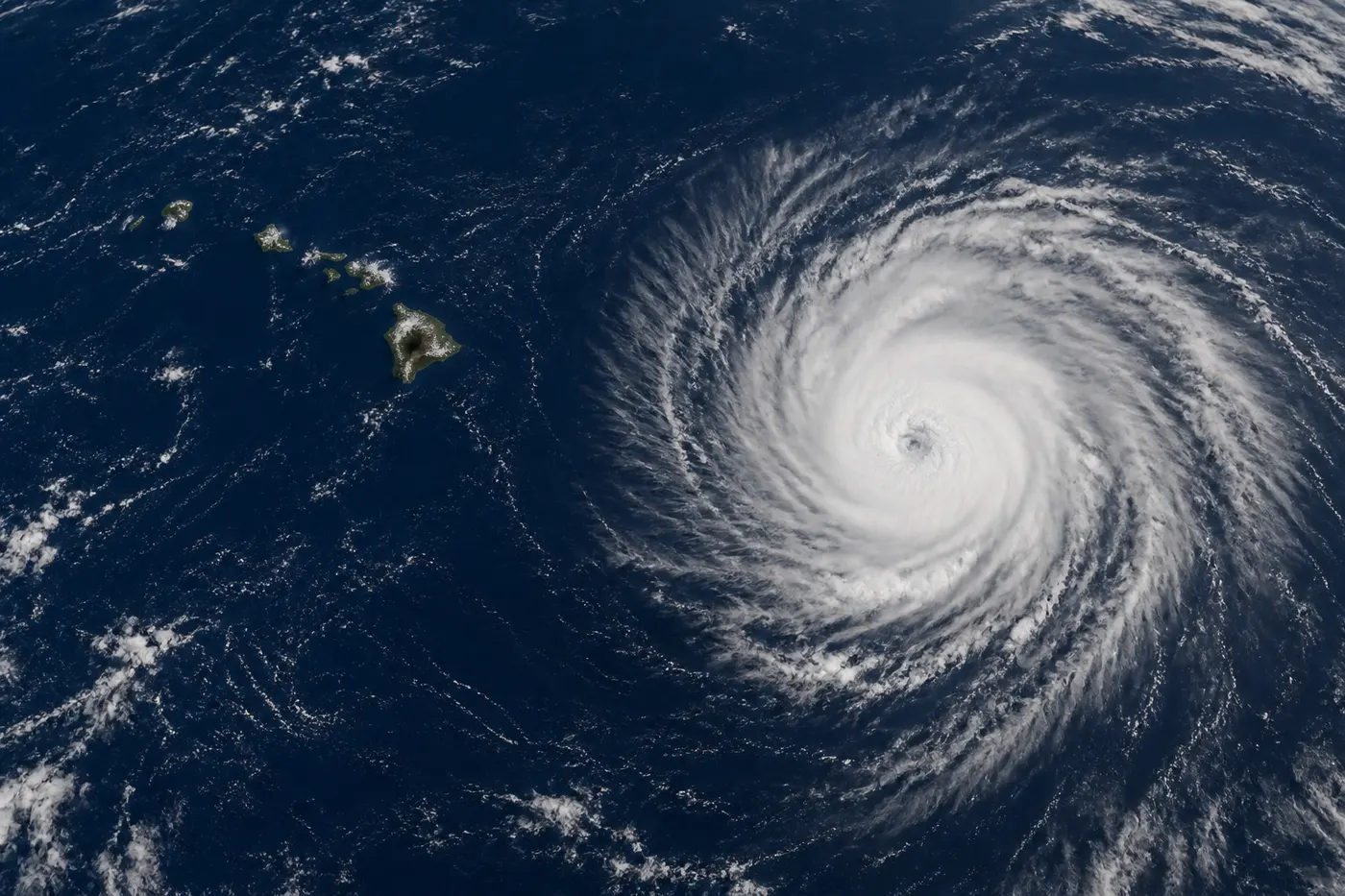
Tropical Storm Lala is now the Central Pacific system drawing the most attention near Hawaii. The National Hurricane Center's latest public information says Lala is holding steady while moving west-northwest, with a forecast to become a hurricane as it approaches the Big Island.
That wording is important. It describes a forecast trend, not a guarantee that a hurricane will cross the island or that every community will see the same conditions. The useful read is to track the official advisory time, forecast path, wind probabilities, rainfall outlook, and any watches or warnings issued for specific areas.
What is confirmed right now
As of the latest NHC and Central Pacific Hurricane Center information available early Friday, Aug. 14, Lala had maximum sustained winds near 60 mph, a minimum central pressure near 997 millibars, and was moving west-northwest near 10 mph. The system was located over the Central Pacific east of Hawaii.
The official page says Lala is forecast to strengthen as it approaches the Big Island. The forecast can change as new satellite data, surface observations, and model guidance arrive, so readers should use the newest advisory rather than a screenshot or an older social post.
What the forecast does not yet tell you
A storm heading toward Hawaii can create different conditions across the islands. The center track is only one part of the picture. The size of the wind field, forward speed, rainfall bands, terrain, and interaction with local waters all affect what people experience.
It is also too early to translate a forecast cone into a precise neighborhood forecast. A cone shows the probable path of the center, not the full area that can receive tropical-storm-force wind, heavy rain, high surf, or dangerous seas. A location outside the center line can still see serious weather.
What Hawaii residents and visitors should monitor
- Official advisories: Check the Central Pacific Hurricane Center and local National Weather Service Honolulu updates for the newest track and hazard language.
- Watches and warnings: These are the products that turn a broad forecast into a location-specific action window. Follow county emergency-management instructions if they are issued.
- Rain and flood risk: Tropical moisture can produce flooding even where the storm center does not pass directly overhead. Avoid flooded roads and obey closures.
- Marine and surf conditions: Boaters, swimmers, and people near exposed shorelines should use official marine and beach guidance, not the center track alone.
- Travel plans: Check airline, airport, ferry, and tour-operator notices before leaving. Weather disruptions can begin before the most serious conditions arrive.
A sensible preparation checklist
Preparation is most useful before a watch or warning becomes urgent. Charge phones and backup batteries, secure loose outdoor items, check medications and drinking water, and make sure everyone in the household knows how to receive county alerts. If you rely on powered medical equipment, contact your provider and utility about backup planning now.
Do not use a generator indoors, in a garage, or near windows and doors. If officials recommend evacuation or moving away from the coast, follow that instruction early and use designated routes. Never drive through floodwater.
Atlantic activity is a separate story
The Aug. 14 Atlantic Tropical Weather Outlook lists no tropical cyclones in the Atlantic. It is tracking two tropical waves: AL92 has a low 30% formation chance through 48 hours and seven days, while AL94 has a low 30% chance through 48 hours and a medium 50% chance through seven days. Those formation percentages are separate from Lala's Central Pacific forecast and do not describe a Hawaii landfall threat.
FAQ
Is Tropical Storm Lala expected to hit Hawaii?
The latest forecast says Lala could strengthen as it approaches the Big Island, but the exact local effects and whether the center crosses land can change. Follow the newest official forecast and local alerts.
Is Lala already a hurricane?
No. The latest information identifies Lala as a tropical storm with maximum sustained winds near 60 mph. The forecast calls for possible strengthening, which is not the same as current hurricane status.
Where can I track Tropical Storm Lala?
Use the Central Pacific Hurricane Center and National Weather Service Honolulu pages at nhc.noaa.gov. County emergency-management pages provide local instructions if watches or warnings are issued.
Bottom line
Lala deserves close attention because the official forecast calls for strengthening near Hawaii. The responsible takeaway is specific but not sensational: prepare for possible wind, rain, surf, marine, and travel disruptions, then let the next official advisories determine what each island and community needs to do.
Sources
- National Hurricane Center and Central Pacific Hurricane Center, latest Central Pacific storm information, checked Aug. 14, 2026.
- National Hurricane Center Atlantic Tropical Weather Outlook, issued 2:00 a.m. EDT Aug. 14, 2026.
- National Weather Service Honolulu, local Hawaii forecast and alert resources.