Hurricane season prep 2026 should begin before the first Atlantic storm becomes a headline. The National Hurricane Center said its Atlantic Tropical Weather Outlook issuance resumes on May 15 or as necessary, and that there were no Atlantic tropical cyclones at 12:15 UTC on Friday, May 15. The Atlantic season itself runs from June 1 through November 30.
That gap matters. It is the window when you can make decisions calmly, before gas lines, store shelves, road traffic, and local alerts turn preparation into a scramble.
This guide is written for households that could feel hurricane impacts directly or indirectly: coastal residents, inland flood-prone communities, renters, homeowners, students, older adults, pet owners, and anyone who may lose power even if the storm center stays far away.
Hurricane season prep 2026 starts with your local risk
Hurricanes are not only coastal wind events. The National Weather Service lists storm surge, inland flooding from heavy rain, destructive winds, tornadoes, high surf, and rip currents among the main hazards from tropical cyclones.
Before June 1, answer four local questions:
- Are you in an evacuation zone? Check your county or city emergency management site, not a social media rumor.
- Are you vulnerable to freshwater flooding? Inland flooding can happen far from landfall.
- Do you rely on powered medical equipment, refrigerated medicine, elevators, or well water? Power loss can be the main risk for some households.
- Where would you go if officials told your zone to leave? Pick a destination before a storm is on the map.
If you already know those answers, hurricane alerts become less confusing. If you do not, every advisory can feel more stressful than it needs to be.
Set up alerts before a storm forms
Do not rely on one app, one platform, or one person texting you. NOAA recommends multiple ways to receive forecasts and alerts. A practical setup includes:
- Wireless Emergency Alerts enabled on your phone.
- Your local National Weather Service office page or alerts.
- Your county or city emergency management alerts.
- The National Hurricane Center for tropical outlooks, advisories, maps, and forecast discussions.
- A battery-powered or hand-crank NOAA Weather Radio if you live in a high-risk area.
- A trusted local TV or radio source for evacuation and shelter information.
Make sure at least one alert path works if power is out and cell service is strained. Print or save key phone numbers in case your phone battery runs low.
Know how to read NHC outlooks without overreacting
The National Hurricane Center Tropical Weather Outlook helps people watch areas that may develop. It is useful early awareness, but it is not the same as a local warning or an order to leave.
Here is the simple difference:
- Tropical Weather Outlook: Watches areas of possible development over the next several days.
- Advisory: Gives official storm position, intensity, movement, hazards, and forecast information for an active tropical cyclone or potential tropical cyclone.
- Watch: Conditions are possible in the watch area, usually with time to prepare.
- Warning: Conditions are expected in the warning area, and action should be taken quickly.
- Local evacuation order: Comes from state or local officials. Follow it for your zone, route, and timing.
The most useful habit is to check both the NHC and local officials. The NHC explains the storm. Local officials explain what your neighborhood should do.
Build a hurricane kit around real needs, not a perfect list
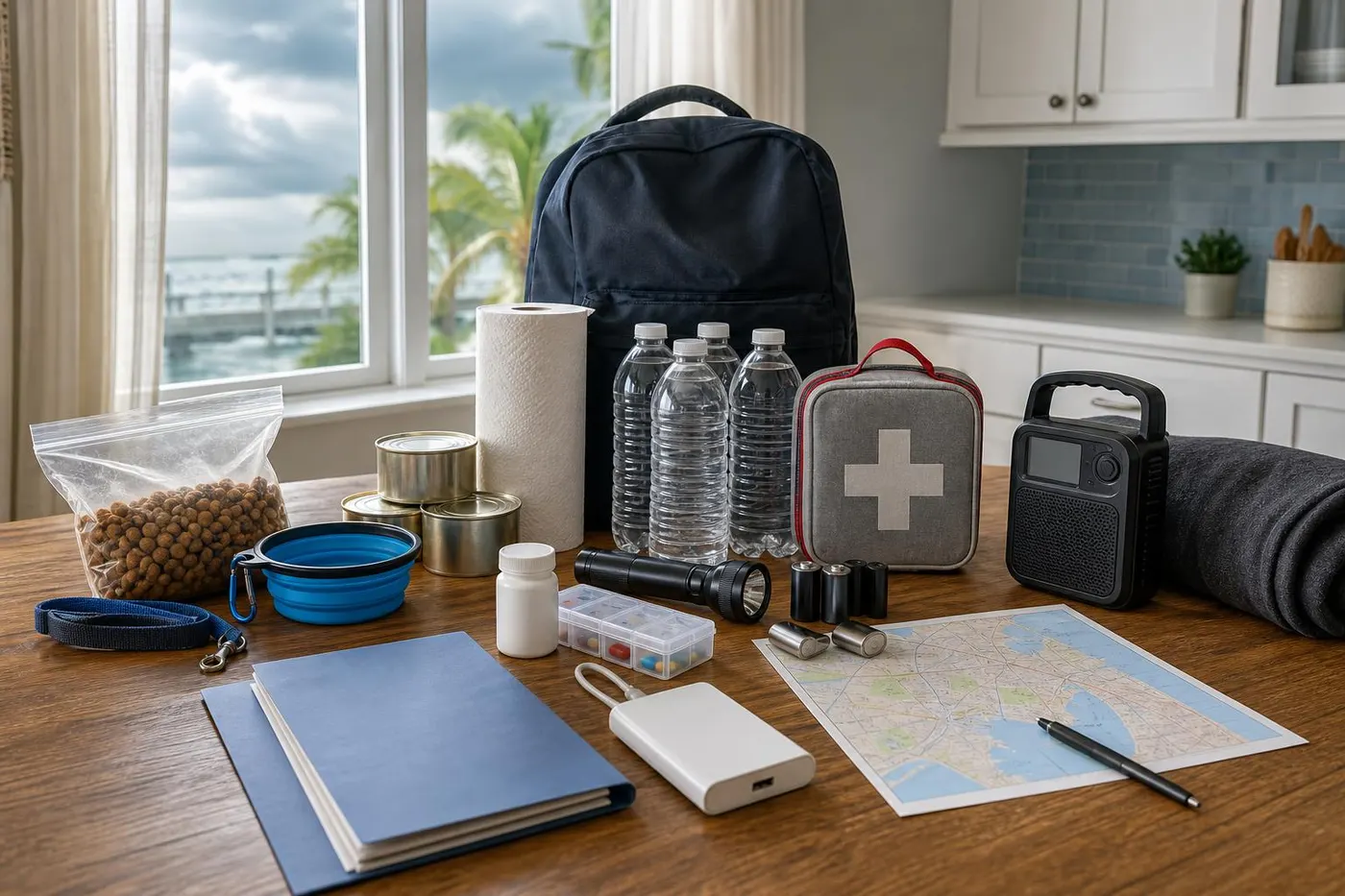
A good kit is the one your household can actually use. Ready.gov guidance for emergency kits centers on basics such as water, nonperishable food, a radio, flashlight, first aid, extra batteries, local maps, phone charging, medication, pet supplies, cash, and copies of key documents.
Start with the essentials:
- Water for drinking and basic hygiene.
- Nonperishable food that does not require complicated cooking.
- Manual can opener.
- Flashlights or lanterns, with extra batteries.
- Battery-powered or hand-crank radio.
- Phone chargers and power banks.
- First-aid supplies.
- Prescription and over-the-counter medication.
- Glasses, contact lens supplies, hearing aid batteries, mobility needs, or other medical items.
- Cash in small bills, if you can set some aside.
- Copies of IDs, insurance policies, bank information, medical information, and emergency contacts in a waterproof container or secure digital backup.
- Pet food, water, medications, leashes, carriers, vaccination records, and a recent pet photo.
Do not wait to buy everything at once if money is tight. Add the highest-need items first, then build from there over a few grocery trips.
Make an evacuation plan before roads are crowded
Ready.gov evacuation guidance says households should know where they will go, learn local evacuation routes, assemble supplies that are ready to leave, keep a portable emergency kit in the car, and follow local instructions during an evacuation.
For hurricane season, your plan should include:
- Destination: A friend, family member, hotel, or shelter option outside the risk area.
- Route: Primary and backup roads, including how to avoid flood-prone spots.
- Vehicle: Keep at least half a tank of gas when a storm threat is possible, and closer to full if evacuation looks likely.
- Timing: Leave when officials tell your zone to leave. Waiting for a better forecast can leave you with worse traffic and fewer options.
- Pets: Identify pet-friendly lodging or shelter options early. Public shelters may limit animals except service animals.
- No-car plan: If you do not drive, contact local emergency management, transit agencies, family, neighbors, or community organizations before a storm.
Write the plan down. A plan that lives only in your head is easier to forget when alerts are changing quickly.
Take insurance photos now
Pre-season photos can help if you need to document damage later. Walk through your home and record:
- Rooms, floors, ceilings, walls, and major appliances.
- Electronics, furniture, tools, bikes, and other valuable items.
- Roof, gutters, windows, doors, garage, fences, sheds, and vehicles.
- Serial numbers for expensive equipment where visible.
- Important receipts, if available.
Store copies somewhere you can reach if your phone is lost, damaged, or out of battery. A secure cloud folder plus an offline copy is better than one camera roll.
This is also the time to review insurance coverage, deductibles, flood coverage, and contact information. Standard homeowners or renters policies may not cover every flood-related loss, so check your actual policy and insurer instead of guessing.
Prepare for power outages
Many households feel hurricane impacts as a power problem first. Think through what stops working if the grid goes down:
- Phone charging.
- Internet and Wi-Fi.
- Refrigeration.
- Air conditioning.
- Medical devices.
- Well pumps.
- Garage doors and security systems.
- Payment terminals at nearby stores.
Charge power banks before a storm. Freeze water bottles to help keep food cold longer if power fails. Know how to open garage doors manually. If you use a generator, follow manufacturer and local safety guidance, keep it outdoors away from windows and doors, and never run it inside a home, garage, or enclosed space.
For a broader outage checklist, Tadpost also has a blackout kit guide that covers lighting, charging, water, food, and safe backup power.
Do the outside chores early
When a storm is days away, small outdoor items become urgent. Before peak season, make a list of what you would bring inside or secure:
- Patio furniture and umbrellas.
- Grills, planters, tools, toys, and trash cans.
- Loose branches or yard debris.
- Window protection if your home uses shutters or panels.
- Boats, trailers, bikes, and outdoor equipment.
Do not climb ladders, trim trees, or install heavy protection once conditions are unsafe. If the work requires help, schedule it before a named storm is threatening your area.
A 7-day pre-season hurricane checklist
Day 1: Risk and alerts
- Check your evacuation zone.
- Sign up for local alerts.
- Bookmark the National Hurricane Center and your local NWS office.
Day 2: Documents
- Photograph IDs, insurance cards, medical cards, prescriptions, and key records.
- Store copies securely and waterproof the paper versions you may need.
Day 3: Water, food, and medicine
- Start building water and nonperishable food supplies.
- Check prescription refill timing and medication storage needs.
Day 4: Power and communication
- Test flashlights, radios, batteries, and power banks.
- Write down emergency contacts and meeting points.
Day 5: Evacuation
- Pick a destination, backup destination, and route.
- Plan for cars, pets, older adults, children, and anyone with medical needs.
Day 6: Home and insurance
- Take property photos.
- Review insurance contacts, deductibles, and flood coverage.
Day 7: Practice and adjust
- Show everyone where supplies are stored.
- Update anything that is missing, expired, or unrealistic.
What to watch after June 1
Once the Atlantic season begins, check tropical updates more often when a system could affect your region. You do not need to refresh maps all day when there is no nearby threat, but you should know where official information lives.
Watch for changes in local conditions, not just the storm category. Tropical storms can still produce dangerous flooding, tornadoes, storm surge, rip currents, and long power outages.
If travel is part of your summer plan, hurricane prep also overlaps with the practical timing in Tadpost's Memorial Day travel guide: check weather along the route, avoid tight connections during storm-prone periods, and build backup time into important trips.
FAQ
When does the 2026 Atlantic hurricane season start?
The Atlantic hurricane season starts June 1, 2026, and runs through November 30, according to the National Hurricane Center.
Were there any Atlantic tropical cyclones on May 15, 2026?
NHC said at 12:15 UTC on May 15 that there were no tropical cyclones in the Atlantic at that time.
What should I do before hurricane season starts?
Check your evacuation zone, set up alerts, build or refresh supplies, photograph documents and property, plan for pets and medical needs, and decide where you would go if officials tell your zone to leave.
Is a Tropical Weather Outlook the same as a hurricane warning?
No. A Tropical Weather Outlook highlights possible development. A warning means conditions are expected in a specific area and action should be taken quickly.
Should renters prepare for hurricane season?
Yes. Renters should document belongings, review renters insurance, plan for power outages, know local shelter and evacuation options, and keep important documents accessible.
Sources
- National Hurricane Center homepage and Tropical Weather Outlook summary, updated May 15, 2026
- National Weather Service hurricane safety tips and resources
- NOAA Hurricane Preparedness page, last updated March 10, 2026
- Ready.gov evacuation guidance
- Ready.gov Hurricane Season Preparedness Digital Toolkit
- Ready.gov pet disaster preparedness guidance