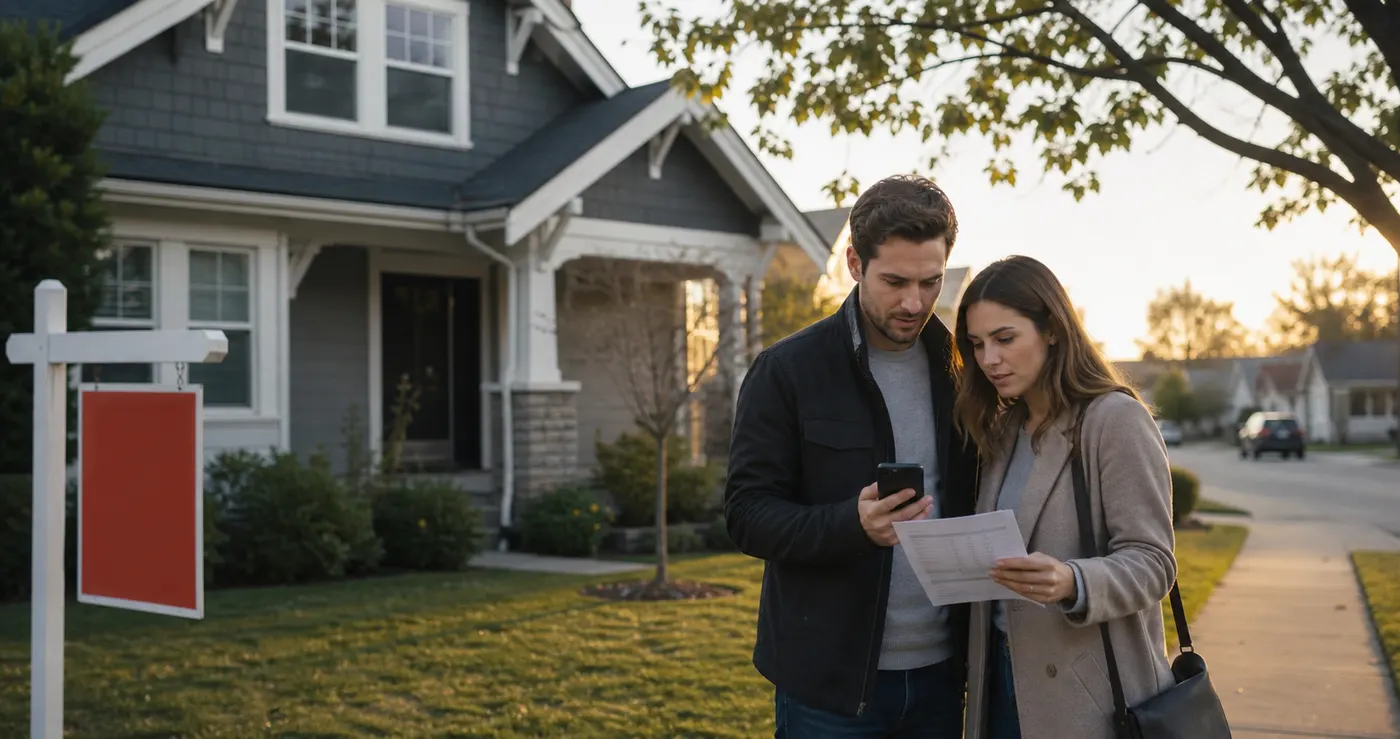
If you keep seeing that mortgage rates are lower than last year and still feel like buying a home is out of reach, you are not imagining it.
Freddie Mac says the average 30-year fixed-rate mortgage was 6.49% on July 9. That is not a crisis spike, and it is below the 6.82% average from a year earlier. But the buying experience is still being shaped by a second problem that matters just as much: home prices are still high, inventory is still tight, and a small rate improvement does not suddenly make the monthly payment comfortable.
That is why the right question is not whether 6.49% is objectively high or low. It is what 6.49% changes for a normal buyer, and what it clearly does not.
What the current mortgage-rate headline actually says
Freddie Mac's weekly survey shows the average 30-year fixed rate at 6.49% for July 9, up slightly from 6.43% the prior week. In other words, the market did not deliver a new affordability break this week. It mostly held buyers near the same rough payment zone they were already dealing with.
That still matters because buyers are rate-sensitive. NAR's July 9 existing-home-sales release says June sales fell 2.4% month over month, and Chief Economist Lawrence Yun said the back-and-forth in monthly sales activity shows how sensitive buyers are to affordability conditions.
In plain English: buyers are still doing the math, hesitating, and walking away when the monthly number feels too heavy.
Why 6.49% does not feel like relief
The fastest answer is price.
NAR says the median existing-home price reached an all-time high of $440,600 in June. That means even a modest improvement in rates can get swallowed by a bigger loan amount, a larger down payment target, and higher taxes and insurance in many markets.
NAR also says inventory slipped 0.6% from May to 1.56 million homes. That is not a collapse, but it is another reason buyers are not suddenly getting easy negotiating power. When supply growth stalls, prices stay sticky and the rate story loses some of its power.
That is the core reason 6.49% still feels expensive. Buyers are not reacting to the mortgage rate in isolation. They are reacting to the full stack: rate, price, cash needed up front, and how few realistic options they may have in the neighborhoods they actually want.
A simple monthly-payment example
Here is a useful way to picture it.
Using NAR's $440,600 median existing-home price, a buyer putting 20% down would borrow about $352,480. At 6.49% on a 30-year fixed mortgage, the principal-and-interest payment works out to about $2,226 per month before property taxes, homeowners insurance, HOA fees, utilities, maintenance, or mortgage insurance.
If that same loan were priced at 6.82%, which is where Freddie Mac's average stood a year earlier, the payment would be about $2,303. That is real savings, but it is only about $77 per month on this example.
The takeaway is not that rates do not matter. They do. The takeaway is that a better rate does not go very far when the home itself costs this much and the rest of the ownership bill still sits on top.
What buyers should compare instead of obsessing over one rate quote
This is where many shoppers get stuck.
A borrower can absolutely care about the headline rate, but the more useful comparison is the full loan offer. The Consumer Financial Protection Bureau says the standard Loan Estimate helps buyers compare the estimated interest rate, monthly payment, closing costs, taxes, insurance, and loan features across lenders.
That matters because two offers with rates that look close can still land very differently once fees, points, mortgage insurance, and cash-to-close are part of the picture.
It also matters because some buyers can improve the deal more through the structure than through the market itself. Credit score, down payment size, loan type, and term still change the real cost of borrowing even when national headlines barely move.
What regular buyers can do now
- Ask for Loan Estimates from more than one lender so you can compare the full package, not just the advertised rate.
- Run the monthly number with taxes, insurance, and any HOA fee included before calling a home affordable.
- Decide whether your real constraint is payment, cash to close, or inventory in your target area. Those are different problems.
- Check whether a different loan type or down-payment plan changes the outcome more than waiting for a tiny rate move.
- Keep the search tied to your household budget, not to the loudest housing post in your feed.
For many households, the buying decision is not blocked by one bad week in mortgage rates. It is blocked by the fact that too many homes still land just outside the monthly comfort zone.
What not to assume
Do not assume that a slightly lower rate automatically means it is time to rush. Do not assume that waiting guarantees a better setup either.
This is still a market where inventory, local competition, property taxes, insurance costs, and household income growth matter as much as the national average mortgage rate. It is also a market where broader budget pressure still exists across food, utilities, transport, and other recurring bills, as Tadpost noted in its May CPI inflation guide.
That is why a buying decision should be framed as a budget decision first and a market-timing bet second.
FAQ
What are current mortgage rates in July 2026?
Freddie Mac says the average 30-year fixed-rate mortgage was 6.49% on July 9, 2026. The prior week was 6.43%.
Why does buying still feel expensive if rates are below last year?
Because the rate is only part of the bill. NAR says the median existing-home price hit an all-time high of $440,600 in June, and inventory slipped from May, keeping affordability pressure high.
How much is the payment on a median-priced home at 6.49%?
Using NAR's June median price and a 20% down payment, the estimated principal-and-interest payment is about $2,226 per month on a 30-year fixed loan. That does not include taxes, insurance, HOA fees, or maintenance.
Did June home sales rise or fall?
NAR says existing-home sales fell 2.4% in June from May, even though year-over-year sales were up 2.8%.
What should buyers compare besides the interest rate?
Compare the full Loan Estimate, including monthly payment, closing costs, taxes, insurance, points, and any special loan features. A slightly lower rate does not always mean the best overall deal.
Is this financial advice?
No. This article is an informational explainer based on current public data and consumer guidance. Buyers should verify their own numbers with lenders and licensed professionals.
Sources
- Freddie Mac Primary Mortgage Market Survey archive. Used for the July 9, 2026 average 30-year fixed rate of 6.49%, the July 2, 2026 rate of 6.43%, and the year-ago comparison cited in NAR's July release.
- National Association of REALTORS existing-home sales news release for June 2026. Used for the 2.4% monthly sales decline, the all-time-high $440,600 median existing-home price, the 1.56 million inventory figure, and Lawrence Yun's affordability comments.
- NAR existing-home sales data page. Used to confirm the July 9, 2026 data-release date and the linked June 2026 housing-statistics materials.
- Consumer Financial Protection Bureau Loan Estimate explainer. Used for the standard Loan Estimate comparison guidance around interest rate, monthly payment, taxes, insurance, and closing costs.
Bottom line
The mortgage market is offering a little less pain than it did a year ago, not a clean break.
At 6.49%, buyers still have to deal with record prices, thin inventory, and the reality that a modest rate improvement may only trim a monthly payment by dozens of dollars, not hundreds. That is why the smartest move right now is not rate obsession. It is comparing full offers, running the real monthly cost, and deciding whether the house still fits after all the non-headline numbers show up.