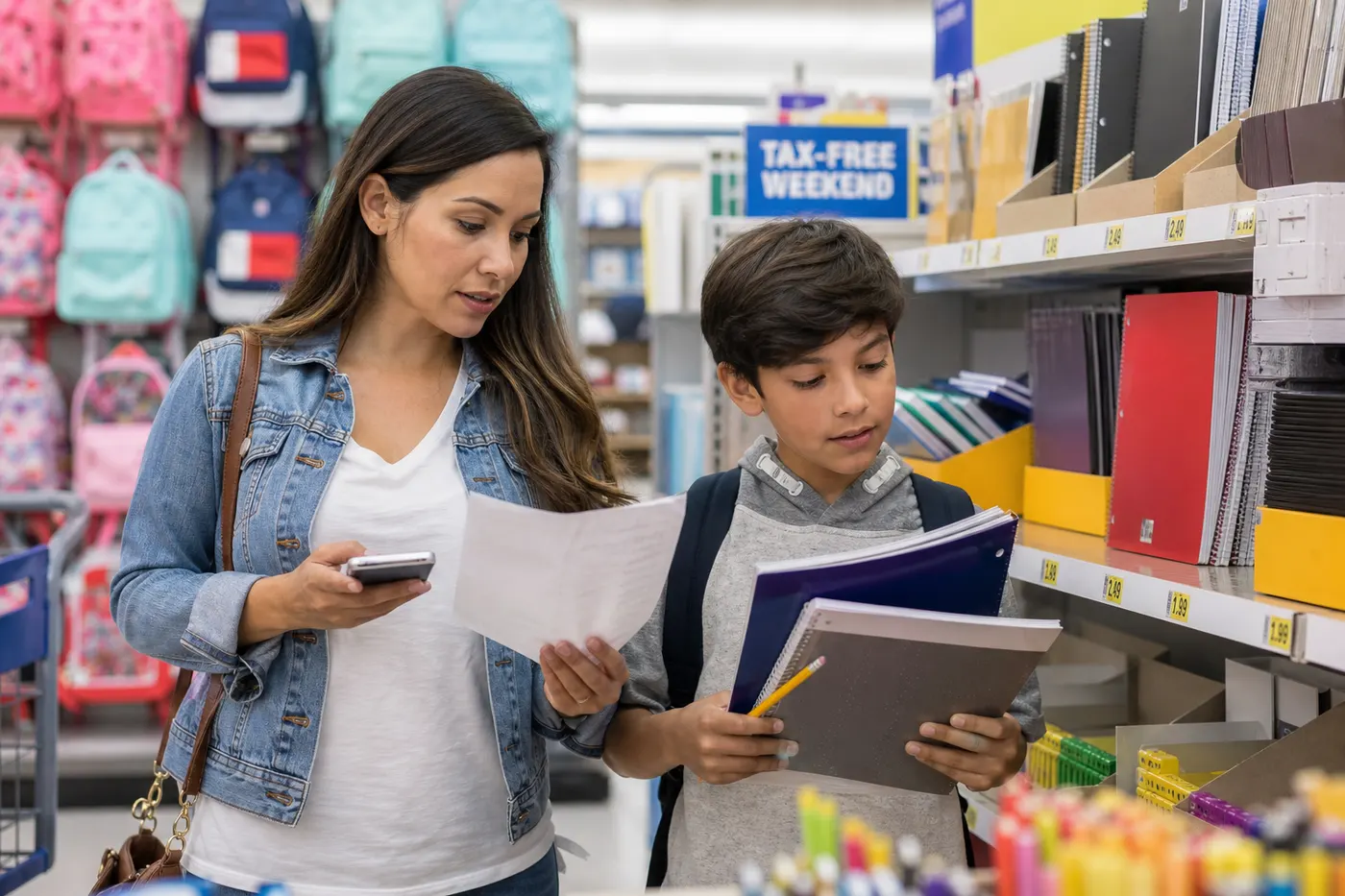
Back-to-school tax-free weekends are useful, but they are easy to overrate. If the goal is saving money, the tax break is only part of the answer. The bigger savings usually come from planning the list, knowing what your school actually requires, and refusing to turn one supply run into a full-cart impulse shopping trip.
That matters more this year because parents, caregivers, and teachers are heading into August with the same problem showing up everywhere: school shopping feels early, expensive, and harder to control than it should. A tax holiday can take the edge off. It does not fix a sloppy plan.
Why this matters now
USA Today reported that 18 states are offering tax-free shopping windows tied to back-to-school season in 2026. The same report said National Retail Federation survey data showed 32 percent of shoppers had already started by early June, and cited PwC estimates that families expect to spend nearly $922 this season.
That combination explains why the story matters. Families are not just bargain hunting. They are trying to get ahead of tight budgets, uncertain supply needs, and the usual late-summer habit of spending too much on the wrong things first.
What a tax-free weekend actually does
A sales tax holiday temporarily removes state sales tax from certain categories, usually school supplies, clothing, footwear, and sometimes computers or related gear. But the details are never one-size-fits-all. Each state sets its own dates, price caps, covered items, and exclusions.
That is why the first useful stop is not a random social post or a store sign. It is the state-by-state 2026 holiday list from the Federation of Tax Administrators. Their guide is the easiest way to confirm whether your state is participating, which dates apply, and where official rule links live.
The mistake families make with tax-free weekends
The common mistake is treating the event like a permission slip to buy everything at once. That is how a modest tax break disappears into extra backpacks, unnecessary organizers, nicer-than-needed notebooks, or clothing purchases that were never on the school list to begin with.
A tax holiday is best used on the items that are both required and predictable. Think notebooks, folders, pencils, calculators, basic clothing replacements, and any approved classroom items you know will get used. It is less useful when it becomes an excuse to upgrade everything.
How to use the weekend without blowing the August budget
Start with the school list if one already exists. If it does not, build a bare-minimum list first and a second maybe-later list after that. The goal is to protect the essentials before the nice-to-haves get a vote.
- Check your state's item rules before shopping, especially for clothing, shoes, laptops, and accessories.
- Separate required items from convenience buys before you leave home.
- Price-check basic supplies online before heading to the store so a sale sticker does not do all the thinking for you.
- Use the tax-free window on the highest-certainty items first.
- Leave room in the budget for teacher-specific requests that often arrive later.
What to buy early and what can usually wait
The best early buys are the boring ones. Basic notebooks, folders, pens, pencils, glue sticks, graph paper, replacement shoes, and plain uniform or dress-code staples rarely become a regret purchase.
The items more likely to wait are the ones schools often clarify later: specialty binders, teacher-specific art supplies, class calculators, niche electronics, and trend-driven extras your child wants before the first week but may not need at all.
If your household needs a laptop or tablet, this is the category where rule-checking matters most. Some states include certain devices and some do not, often with price caps. Do not assume a checkout total will be tax-free just because the sign says school savings.
Why the list matters more than the sale sign
Retailers are very good at making August feel urgent. That does not mean every display belongs in your cart. The strongest back-to-school shopping habit is still the least glamorous one: compare the school list against what is already in the house before buying duplicates.
One half-used notebook, extra pencils from spring, a working lunch bag, or a backpack that survived last year just fine can save more than a tax holiday if the alternative is buying replacements out of habit.
If you are shopping for more than one child
Tax-free weekends can feel chaotic for larger households because the same sale pulls everyone toward the same day. If that is your setup, divide the run into tiers. Essentials first. Size-sensitive clothing second. Optional extras last.
That approach keeps one child's shoe or backpack need from getting buried under everyone else's impulse pile. It also makes it easier to stop when the budget hits the real limit instead of the emotional limit.
What to check before you head out
- your state's official tax-holiday rules or the Federation of Tax Administrators state list
- your school or district supply list
- the current prices for the 5 to 10 highest-cost items on your list
- whether any item limits apply to clothing, electronics, or footwear
- what is already at home and still usable
FAQ
How many states have back-to-school tax holidays in 2026?
USA Today reported that 18 states are offering tax-free shopping windows tied to back-to-school season in 2026.
Where can I verify my state's dates and item rules?
The Federation of Tax Administrators has a 2026 state-by-state sales tax holiday guide that links readers to current rules and notes when provisions are statute-based or still being finalized.
Do tax-free weekends cover everything in the store?
No. Covered items, date windows, and price caps differ by state. Clothing, school supplies, and computers may be treated differently depending on where you live.
What saves more: the tax break or buying less?
Usually buying less. The sales-tax break helps, but it is smaller than the savings from skipping extra items that were never truly needed.
Should families buy laptops during the tax holiday?
Only after checking the state rules. Some states include certain devices or cap the purchase price, and some do not treat technology the same way they treat notebooks or shoes.
Sources
- Federation of Tax Administrators 2026 Sales Tax Holidays, checked July 31, 2026.
- USA Today back-to-school sales tax holiday guide, updated July 27, 2026.
The bottom line
Back-to-school tax-free weekends are real savings, just not effortless savings. Families get the most out of them when they verify the rules, protect the essentials first, and refuse to let one sales-tax break turn into a much bigger overspend.