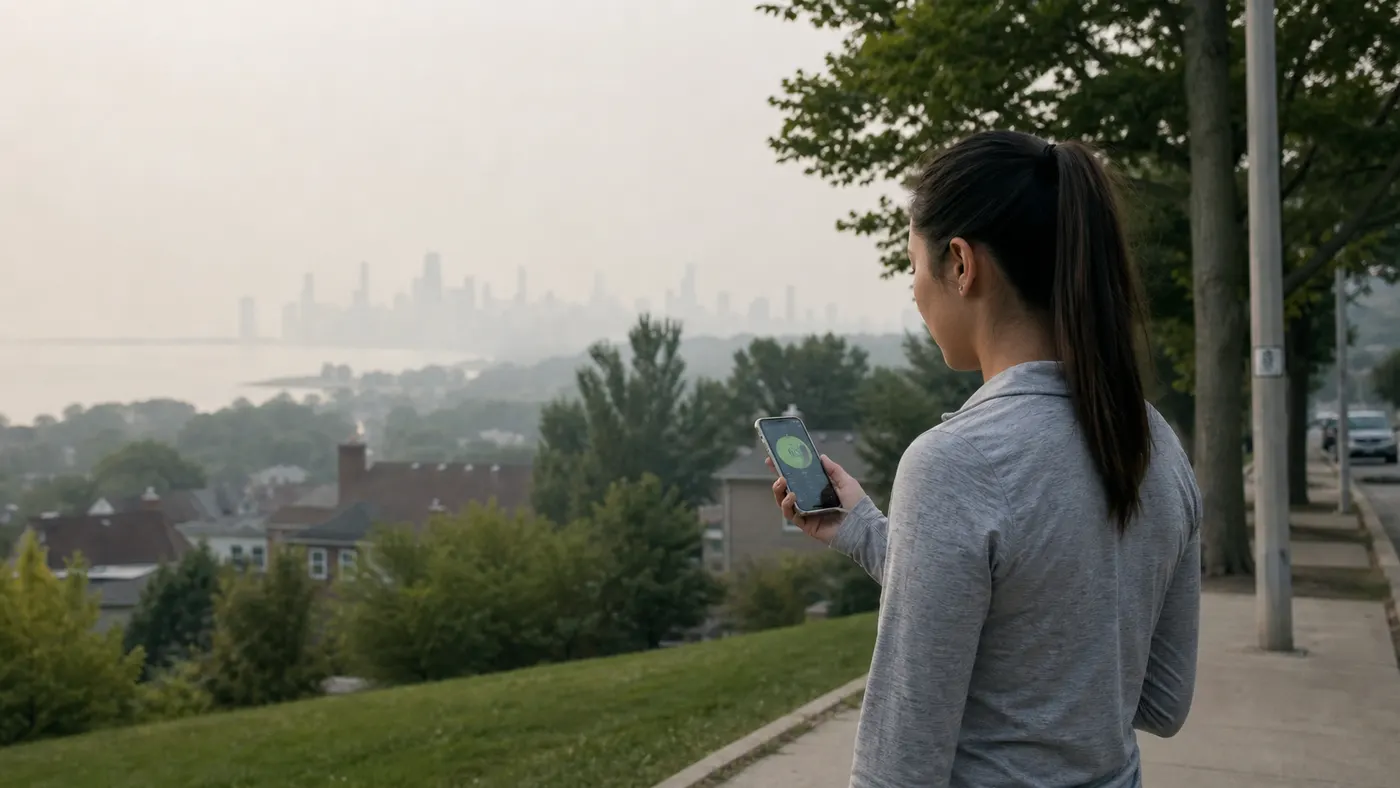
Wildfire smoke is one of the easiest hazards to underestimate because it does not always look dramatic. Sometimes the sky looks brown and the air smells like a campfire. Other times it just feels a little wrong outside, and people keep their plans until the cough, headache, or chest tightness shows up later.
AirNow's state page warning on July 17 says wildfire smoke is impacting air quality in multiple states and points readers to the Fire and Smoke Map to check conditions in their own area. That is the right frame for a smoke day. The useful question is not the national map alone. It is the local one: should you still go for that run, send kids to practice, work outside for hours, or leave the windows open?
What an Air Quality Alert actually means
An Air Quality Alert is a warning that pollution levels may be high enough to affect health. During smoke events, the main concern is usually fine particle pollution, also called PM2.5. These particles are small enough to travel deep into the lungs.
You do not need to memorize the chemistry to use the alert well. Think of it this way:
- The alert is your cue to stop guessing.
- Local conditions can change within hours.
- Smoke can be worse in one neighborhood than another.
- Hard exercise outside can turn a manageable day into a bad one fast.
What AQI means in plain English
AirNow says the Air Quality Index, or AQI, is EPA's daily tool for communicating air quality. It uses color-coded categories and tells people which groups may be affected and what steps can reduce exposure.
Here is the version most readers actually need:
- Green (0-50): Air quality is generally good.
- Yellow (51-100): Usually acceptable, but some unusually sensitive people may notice symptoms.
- Orange (101-150): Unhealthy for sensitive groups. This is where children, older adults, people with asthma, and people planning long outdoor workouts should start changing plans.
- Red (151-200): Unhealthy. More people may notice symptoms, and outdoor exertion should be reduced.
- Purple (201-300): Very unhealthy. Outdoor time should be cut back sharply.
- Maroon (301+): Hazardous. This is a stay-inside level for most people.
The important part is not the color alone. It is the match between the reading and the activity. A walk to the mailbox is different from soccer practice, roofing work, yard cleanup, or a five-mile run.
The fastest way to check smoke conditions before you go outside
AirNow's wildfire guidance says to use the Fire and Smoke Map when smoke is affecting your air quality. It is the best first stop because it is built for smoke events, not just general air-quality browsing.
Check in this order:
- Open the AirNow Fire and Smoke Map.
- Search your city or current location.
- Look at the nearest PM2.5 reading and the AQI color.
- Check whether the reading is getting better or worse.
- Confirm whether your state or local air agency has an alert or advisory in place.
AirNow says the map can show your air quality from fine particle pollution, whether conditions are getting better or worse, smoke plumes, fire locations, and smoke outlooks where available. That is much more useful than relying on the smell outside your front door alone.
Who should be more careful first
Some people should not wait for conditions to get obviously bad.
Be more cautious if you are:
- a child or teenager spending time outdoors
- an older adult
- pregnant
- living with asthma, COPD, or another lung condition
- living with heart disease
- working outside for long hours
- training, running, cycling, or doing another hard outdoor workout
Even healthy adults can feel smoke on bad days, especially during prolonged outdoor activity. Burning eyes, coughing, scratchy throat, unusual fatigue, or chest tightness are signs to reduce exposure.
When to change your plans
Most people do not need a perfect AQI lecture. They need a decision rule.
- If AQI is yellow, most plans can continue, but sensitive people should pay attention to symptoms.
- If AQI is orange, sensitive groups should shorten outdoor time, lower intensity, or move activities inside.
- If AQI is red, many people should avoid strenuous outdoor exercise and keep outside time shorter.
- If AQI is purple or maroon, treat it like a real health event. Move activities indoors if possible and keep windows closed unless local guidance says otherwise.
If you coach, supervise children, manage outdoor crews, or run community events, it is smarter to decide early than to improvise once people are already outside.
What helps reduce smoke exposure at home
If smoke is lingering in your area, the goal is simple: make indoor air cleaner than the air outside.
- Keep windows and doors closed when outside air is worse than indoor air.
- Avoid adding more indoor pollution by burning candles, using fireplaces, or vacuuming heavily if it stirs up particles.
- Run air conditioning on recirculate if your system supports it.
- Use a clean air purifier if you have one.
- If you need to go outside, keep the trip short and skip hard exertion.
If your home starts heating up because windows need to stay closed, balance smoke safety with heat safety. That matters most for older adults, infants, and anyone without reliable cooling.
FAQ
What is AQI in simple terms?
AQI is EPA's daily air-quality scale. It uses colors and number ranges to show how healthy or unhealthy outdoor air is and who should be most careful.
What should I check first on a smoke day?
Check your local AQI and the AirNow Fire and Smoke Map first. AirNow specifically recommends the Fire and Smoke Map when wildfire smoke is affecting local air quality.
Does smoke only matter near the wildfire itself?
No. Smoke can travel far from the fire source, which is why people far from active flames can still wake up under an air-quality alert.
When should I stop exercising outside?
Sensitive groups should begin changing plans in the orange AQI range. If AQI reaches red or higher, most people should avoid strenuous outdoor exercise.
What symptoms mean I should go inside?
Coughing, burning eyes, sore throat, chest tightness, unusual fatigue, or shortness of breath are strong reasons to reduce exposure and move indoors.
What if local conditions look fine but the regional news says smoke is bad?
Check your own reading anyway. Smoke can vary a lot within the same metro area, which is exactly why the Fire and Smoke Map is useful.
Bottom line
Smoke days are not the time to wing it. Check AQI, use the Fire and Smoke Map, and match the reading to what you were planning to do outside.
That is the difference between a small schedule change and a rough day of coughing, headaches, or worse. If smoke is affecting your area today, verify local conditions before outdoor plans instead of waiting for symptoms to make the decision for you.
Sources
- AirNow: Using Air Quality Index. Used for AQI definitions, color categories, sensitive-group framing, NowCast language, and outdoor-activity planning guidance.
- AirNow: Using AirNow During Wildfires. Used for the recommendation to use the Fire and Smoke Map during smoke events and for what the map shows: PM2.5 conditions, trends, smoke plumes, fire locations, and outlooks.
- AirNow state page notice. Rechecked July 17, 2026. Used for the same-day notice that wildfire smoke is impacting air quality in multiple states and that readers should use the Fire and Smoke Map to check impacts in their area.
- National Weather Service. Used for the national alerts map references to Air Quality Alerts and Dense Smoke Advisories as active public-alert products.