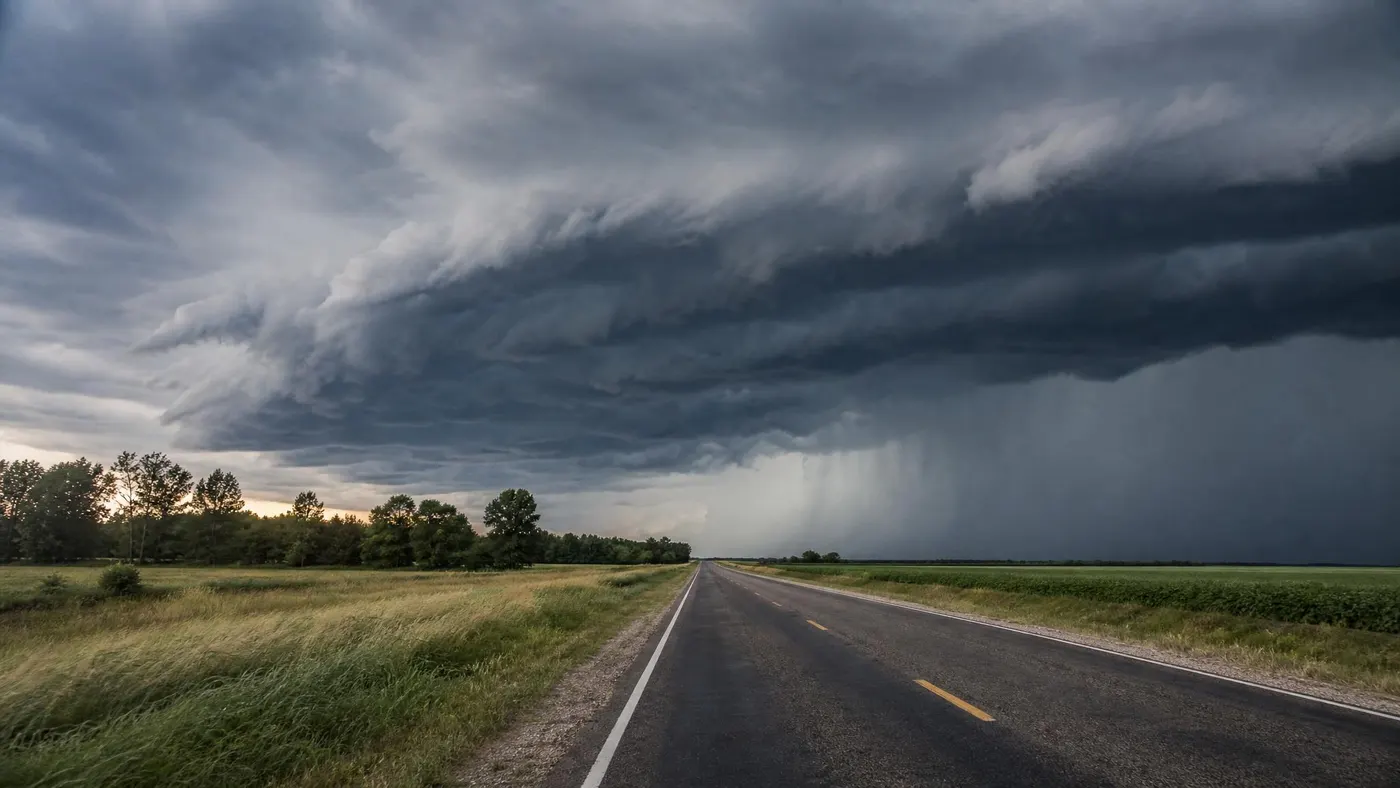
A new round of severe weather is expected to affect parts of the South and Southeast on Wednesday, May 6, with some risk lingering into Thursday, May 7. The highest concern in the latest early-morning NOAA Storm Prediction Center outlook is centered on portions of northern Louisiana, central Mississippi, and central Alabama, where an Enhanced Risk of severe thunderstorms is in place for Wednesday afternoon and evening.
This is not a forecast to ignore if you live in the risk area. It also is not a reason to panic. The practical takeaway is simple: know your local forecast, turn on reliable alerts, decide where you would shelter before storms arrive, and pay attention to flood-prone roads if heavy rain develops.
Where the severe weather risk is highest on May 6
The most concerning part of Wednesday's severe-weather setup is the Enhanced Risk zone across portions of northern Louisiana, central Mississippi, and central Alabama. An Enhanced Risk is the third level on SPC's five-step severe-weather scale. It means a greater concentration of organized severe thunderstorms is possible compared with a Marginal or Slight Risk.
SPC's early Wednesday outlook says scattered severe thunderstorms are expected from eastern Texas into the lower Mississippi and Tennessee Valleys and the southern Appalachians. The agency highlights the potential for supercells in parts of central Mississippi and Alabama before storms shift toward a more widespread damaging-wind risk later in the evening and overnight.
For readers, the geography matters less than the local alert. Severe-weather outlooks show broad zones of potential. Watches and warnings narrow that risk down as storms actually form. If your county is in or near the risk area, follow your local National Weather Service office and make sure Wireless Emergency Alerts are enabled on your phone.
What could happen: tornadoes, large hail, and damaging wind
Wednesday's setup includes several hazards that can overlap in the same storm.
Tornadoes: SPC notes that a strengthening low-level jet could increase tornado potential in parts of the Enhanced Risk area, especially if supercells form and sustain themselves. A tornado threat does not mean every town in the risk area will see a tornado. It does mean people should be ready to act quickly if a Tornado Warning is issued.
Large hail: Isolated supercells can produce hail large enough to damage vehicles, roofs, siding, crops, and windows. If hail is forecast, bring vehicles under cover when possible before storms arrive and avoid being outside during thunderstorm warnings.
Damaging wind: As storms cluster and form lines, the main hazard can shift toward damaging straight-line winds. These winds can knock down trees and power lines even when no tornado occurs. Treat Severe Thunderstorm Warnings seriously, especially when they mention destructive winds.
Flooding is a separate threat to watch
Severe thunderstorm outlooks focus on tornadoes, wind, and hail. Flood risk is tracked separately by the Weather Prediction Center and local NWS offices.
The WPC excessive rainfall outlook valid from 12Z Wednesday, May 6, through 12Z Thursday, May 7, shows a Day 1 Slight Risk. WPC describes the Excessive Rainfall Outlook as a forecast of the probability that rainfall will exceed flash-flood guidance within 25 miles of a point.
In plain English, repeated heavy rain over the same areas can create scattered flash flooding, especially where soils are saturated, drainage is poor, or storms move through at night. The most dangerous flood mistake is driving into water-covered roads. If you encounter a flooded road, turn around and choose another route.
What changes on May 7
By Thursday, May 7, the severe-weather threat looks more limited but not zero. SPC's Day 2 outlook places a Marginal Risk across far southern Alabama, the Florida Panhandle, and into South Carolina.
The Thursday setup is expected to favor clusters or line segments of storms, with isolated strong to severe wind gusts as the main hazard. SPC also notes that a brief tornado could occur, but damaging gusts are the primary concern in that outlook.
In practical terms, Thursday may not have the same broad severe signal as Wednesday, but people in the Marginal Risk zone should still keep alerts on and check the latest forecast before commuting, traveling, or sending kids to outdoor activities.
What an Enhanced Risk means in plain English
SPC uses five main categorical risk levels for severe thunderstorms: Marginal, Slight, Enhanced, Moderate, and High. Enhanced is serious because it means the atmosphere has enough support for organized severe storms in a focused region.
That does not guarantee a tornado or damaging storm at your exact address. It does mean your safety plan should be ready before storms begin.
Watch vs warning: the alert terms that matter
A Tornado Watch means tornadoes are possible in and near the watch area. This is the time to review your shelter plan, charge devices, move pets indoors, and keep weather information close.
A Tornado Warning means a tornado has been sighted or indicated by radar. This is the time to take shelter immediately in a basement or an interior room on the lowest floor of a sturdy building, away from windows.
A Flood Watch means conditions are favorable for flooding. A Flash Flood Warning means flash flooding is imminent or already happening, and people in flood-prone areas should move to higher ground.
How to prepare before storms arrive
If you are in or near the May 6 risk area, do these things before storms reach your county:
- Charge phones, battery packs, radios, flashlights, and medical devices.
- Turn on Wireless Emergency Alerts and add a trusted weather app or NOAA Weather Radio if available.
- Identify your safe place: a basement, storm shelter, or small interior room on the lowest floor of a sturdy building.
- Put shoes, keys, medications, pet leashes, and important documents where you can grab them quickly.
- Bring in or secure outdoor furniture, trash cans, grills, toys, and loose items.
- Park vehicles away from trees if possible.
- Do not rely only on outdoor sirens, especially indoors or while sleeping.
- Check on relatives, neighbors, and anyone who may not receive phone alerts.
- Plan a backup route if your usual road floods.
If you live in a mobile home, know where you would go before a Tornado Warning is issued. Mobile homes are not safe shelter in a tornado. The best plan is to move to a sturdy building well before storms arrive if your area is under a watch and storms are approaching.
What travelers and commuters should do
Severe weather can disrupt flights, highways, school schedules, outdoor events, and evening commutes. If you are traveling through the lower Mississippi Valley, Tennessee Valley, Southeast, or southern Appalachians on Wednesday or Thursday, check airline and airport alerts before leaving, leave extra time if heavy rain is possible, and avoid parking under large trees during storms.
Never pull under an overpass during a tornado warning. It can create dangerous wind conditions and block traffic. If a warning is issued while driving, seek a sturdy building if one is nearby.
What to monitor next
The most important updates will come from the latest SPC outlooks, local NWS watches and warnings for your county, WPC excessive rainfall outlooks, local flood alerts, and local emergency-management or school announcements.
Forecasts can change quickly on severe-weather days. The morning outlook is useful for planning, but watches, warnings, and local radar determine what you should do hour by hour. As of the SPC current-watches page checked at 08:16 UTC on May 6, no convective watches were valid yet, which means readers should keep checking for updates as storms develop later.
FAQ
Is an Enhanced Risk the same as a tornado outbreak?
No. An Enhanced Risk means organized severe thunderstorms are more likely in a focused area. Tornadoes can occur in an Enhanced Risk, but the category also accounts for damaging wind and large hail.
Should I cancel plans if I am in the risk area?
It depends on timing and your local forecast. Outdoor plans, long drives, and events without sturdy shelter deserve extra caution. Check your local NWS forecast and have a way to receive warnings.
What is the safest room during a tornado warning?
Use a basement, storm shelter, or small interior room on the lowest floor of a sturdy building. Stay away from windows. Bathrooms, closets, and hallways can be safer if they are interior and low in the building.
Are severe thunderstorm warnings dangerous if there is no tornado warning?
Yes. Severe thunderstorms can produce damaging winds and large hail. Straight-line winds can knock down trees, power lines, and mobile structures.
Where should I get live alerts?
Use official alerts from the National Weather Service, Wireless Emergency Alerts, NOAA Weather Radio, and local emergency-management sources. Social media can be useful, but it should not be your only alert source.
Sources
- NOAA Storm Prediction Center Day 1 Convective Outlook, updated Wednesday, May 6, 2026 at 05:49 UTC
- NOAA Storm Prediction Center Day 2 Convective Outlook, updated Wednesday, May 6, 2026 at 05:10 UTC
- NOAA Storm Prediction Center Current Convective Watches, checked Wednesday, May 6, 2026 at 08:16 UTC
- NOAA Weather Prediction Center Excessive Rainfall Outlook, issued Wednesday, May 6, 2026 at 08:17 UTC
- National Weather Service tornado watch, warning, and emergency guidance
- National Weather Service flood watch and warning guidance
- NOAA Storm Prediction Center convective outlook category information