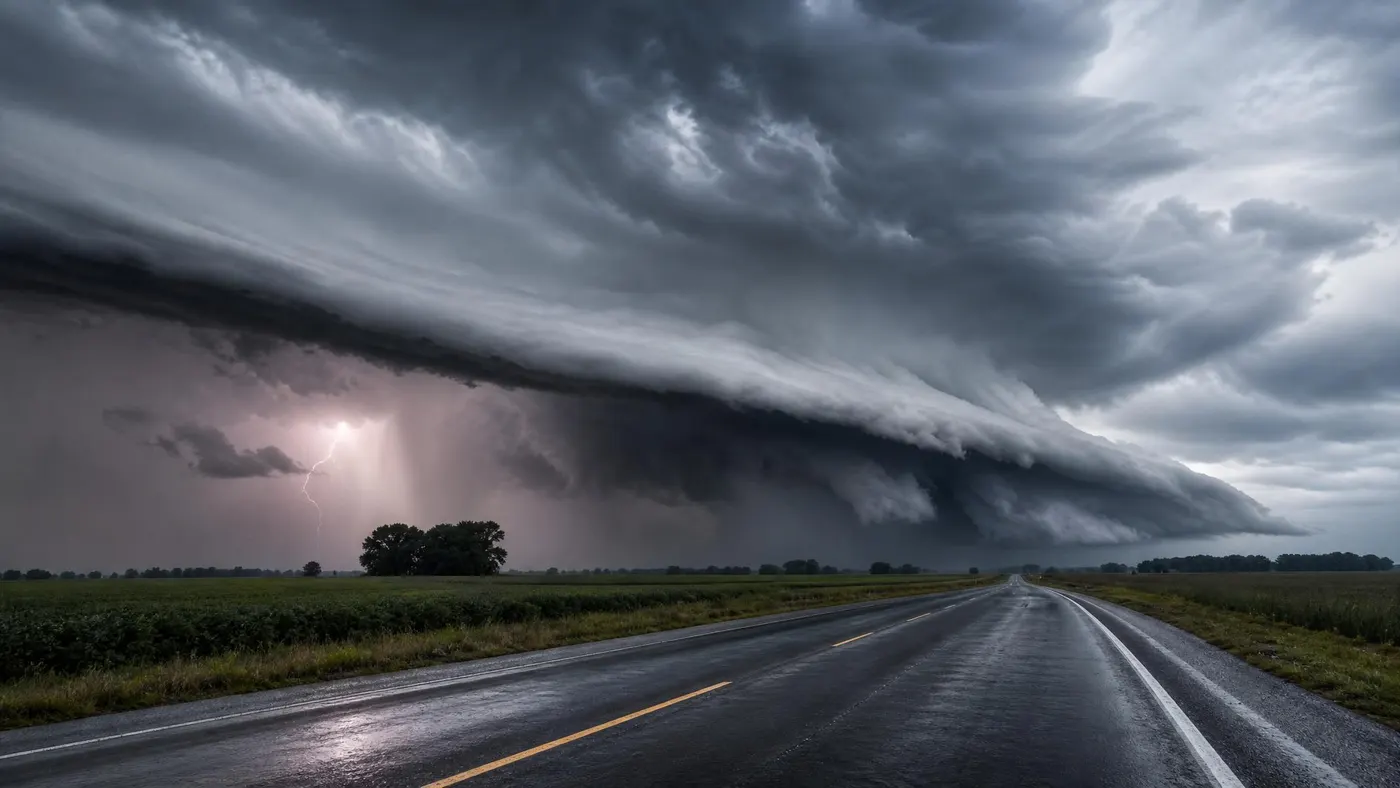
NOAA's Storm Prediction Center is watching two consecutive days of severe storm potential across parts of the South. The first risk is Tuesday, May 5, 2026, with a Slight Risk centered over Arkansas and extending from northeast Texas into western Tennessee. The second is Wednesday, May 6, with another Slight Risk from northeast Texas into the Lower Mississippi and Tennessee Valleys.
That does not mean every town in the outlook area will see damaging weather. It does mean the ingredients may support thunderstorms capable of large hail, damaging wind gusts, and a few tornadoes. For households in the risk zone, the useful move is not panic. It is preparation before warnings are issued.
Where severe weather is possible Tuesday, May 5
For Tuesday, the Storm Prediction Center's Day 1 outlook places a Slight Risk of severe thunderstorms centered over Arkansas and extending from northeast Texas into western Tennessee.
The agency says widely scattered severe storms are possible Tuesday afternoon into Tuesday night from northeast Texas into western Tennessee, with the strongest storms capable of large hail, damaging winds, and a few tornadoes. Arkansas appears to be the core area to watch, but the broader corridor includes nearby parts of northeast Texas, the Ozarks, western Tennessee, and surrounding areas.
The exact storm coverage may depend on morning storms, cloud cover, heating during the day, and where boundaries set up by late afternoon and evening. If storms can form and become sustained, the environment may support rotating supercells at first, which can produce large hail and tornadoes. Later, storms may organize into clusters or lines, which can raise the damaging wind concern.
Where severe weather is possible Wednesday, May 6
For Wednesday, the Storm Prediction Center's Day 2 outlook highlights a Slight Risk from northeast Texas to the Lower Mississippi and Tennessee Valleys.
The agency says scattered strong to severe thunderstorms are expected Wednesday afternoon and evening across portions of Texas into the Lower Mississippi and Tennessee Valleys and southern Appalachians. Damaging winds, large hail, and a couple of tornadoes are possible.
The Wednesday setup may include rich Gulf moisture ahead of a cold front. Parts of northern Louisiana, Mississippi, Alabama, the Tennessee Valley, and the southern Appalachians may need to monitor local updates closely, especially if storms become more organized during the afternoon and evening.
The outlook also notes a conditional risk for more significant hazards if semi-discrete supercells can develop before storms merge into a line. That means the details of storm mode matter. A line of storms often emphasizes wind damage, while isolated supercells can bring a higher concern for large hail and tornadoes.
What a Slight Risk means
A Slight Risk is level 2 out of 5 on the Storm Prediction Center's severe weather scale. It is not the highest category, but it is still meaningful.
The word slight can sound casual, which is why it often confuses people. In severe weather forecasting, a Slight Risk means organized severe thunderstorms are possible in the outlook area. Some people may get little more than rain and thunder. Others may experience storms strong enough to damage roofs, trees, vehicles, power lines, or outbuildings.
The key is to treat the outlook as an early planning signal. Watches and warnings, if issued, will be more specific and urgent.
The three main hazards: hail, wind, and tornadoes
Large hail
Large hail can break windows, damage roofs, dent vehicles, and injure people caught outside. If severe storms are possible in your area, move vehicles into a garage or covered area before storms arrive if you can do so safely. Bring pets indoors and avoid standing near windows during the strongest storms.
Damaging winds
Damaging thunderstorm winds can bring down trees and power lines. They can also make driving dangerous, especially for high-profile vehicles. A severe thunderstorm warning should not be brushed off just because it is not a tornado warning. Severe thunderstorm winds can still cause serious damage.
Tornadoes
A few tornadoes are possible in the Tuesday and Wednesday outlooks. The best time to decide where you would shelter is before a warning is issued.
The safest place is usually a basement or an interior room on the lowest floor of a sturdy building, away from windows. If you live in a mobile home, know where you would go before storms arrive. Mobile homes are not safe tornado shelters.
Watch vs warning: the difference that matters
A watch means conditions are favorable for severe thunderstorms or tornadoes in and near the watch area. It is your cue to stay alert, review your plan, and keep warnings close.
A warning means severe weather is imminent or already occurring. It is your cue to act immediately.
For example, a tornado watch does not mean a tornado has been spotted in your town. A tornado warning means radar or spotter information indicates a tornado threat for a more specific area. When a warning includes your location, do not wait for visual confirmation. Move to shelter.
What to do before storms arrive
Use this checklist if you are in or near the risk areas for Tuesday or Wednesday:
- Check your local forecast. Start with your local National Weather Service office, not just a national map.
- Turn on phone alerts. Make sure Wireless Emergency Alerts are enabled.
- Have more than one warning source. Use a weather radio, trusted weather app, local TV, or local emergency alerts.
- Know your shelter location. Pick a basement, storm shelter, or small interior room on the lowest floor.
- Clear the shelter space. Move clutter so everyone can get in quickly.
- Charge devices. Charge phones, battery packs, flashlights, and medical devices if needed.
- Move vehicles and outdoor items. If it is safe before storms arrive, protect vehicles from hail and secure loose outdoor items.
- Plan for pets. Keep leashes, carriers, food, and medication close to your shelter area.
- Do not drive into flooded roads. Severe storm systems can also bring heavy rain. Turn around if water covers the road.
- Check on others. Make sure children, older relatives, neighbors, and anyone without reliable alerts knows the plan.
What travelers should watch
If you are driving through Arkansas, northeast Texas, northern Louisiana, Mississippi, Alabama, Tennessee, or nearby areas during the risk window, build extra time into your trip.
Before leaving, check local radar and warnings along your route, airline and airport status if flying through the region, whether your hotel or destination has an interior shelter area, and road conditions if heavy rain or flooding occurs.
Do not try to outrun a warned storm in a car. If a tornado warning is issued and you are on the road, the safest option depends on your exact location and available shelter. A sturdy building is better than a vehicle. Overpasses are not safe tornado shelters.
What could change
Severe weather forecasts can change quickly as new data arrives. Morning storms can stabilize the atmosphere and lower the risk in some places, or they can leave boundaries that increase risk later. Cloud cover, daytime heating, wind shear, and the exact cold front position can all shift the area of greatest concern.
That is why the next outlooks, mesoscale discussions, watches, and local warnings matter. The national outlook is the broad signal. Your local NWS warnings are the call to act.
Bottom line
The May 5 and 6 severe weather risk is a practical preparedness story. Arkansas is the main focus Tuesday, with the corridor extending from northeast Texas into western Tennessee. On Wednesday, the concern shifts and expands from northeast Texas into the Lower Mississippi and Tennessee Valleys, with damaging winds, large hail, and a couple of tornadoes possible.
If you are in the risk area, use the outlook as your early warning. Check local forecasts, prepare your shelter space, and make sure warnings can reach you before storms arrive.
FAQ
Is a Slight Risk serious?
Yes. It is level 2 out of 5, but it still means organized severe storms are possible. People in the outlook area should stay weather-aware and be ready to act if warnings are issued.
Does everyone inside the risk area get severe weather?
No. Severe storm outlooks describe regional potential, not a guarantee for every town. Some places may see little impact, while nearby communities may see damaging hail, wind, or tornado warnings.
What is the safest place during a tornado warning?
Go to a basement, storm shelter, or small interior room on the lowest floor of a sturdy building. Stay away from windows. Protect your head and neck.
Should I wait for a siren?
No. Outdoor sirens are designed mainly for people outside, and they may not be heard indoors. Use phone alerts, weather radio, local media, and official warnings.
What should I do during a severe thunderstorm warning?
Move indoors, stay away from windows, and avoid using plugged-in electronics if lightning is nearby. Treat warnings seriously, especially when damaging wind or large hail is mentioned.
Sources
- NOAA Storm Prediction Center Day 1 Convective Outlook, updated Tuesday, May 5, 2026 at 05:36 UTC
- NOAA Storm Prediction Center Day 2 Convective Outlook, updated Tuesday, May 5, 2026 at 05:07 UTC
- National Weather Service severe thunderstorm watch and warning guidance
- National Weather Service tornado watch and warning guidance