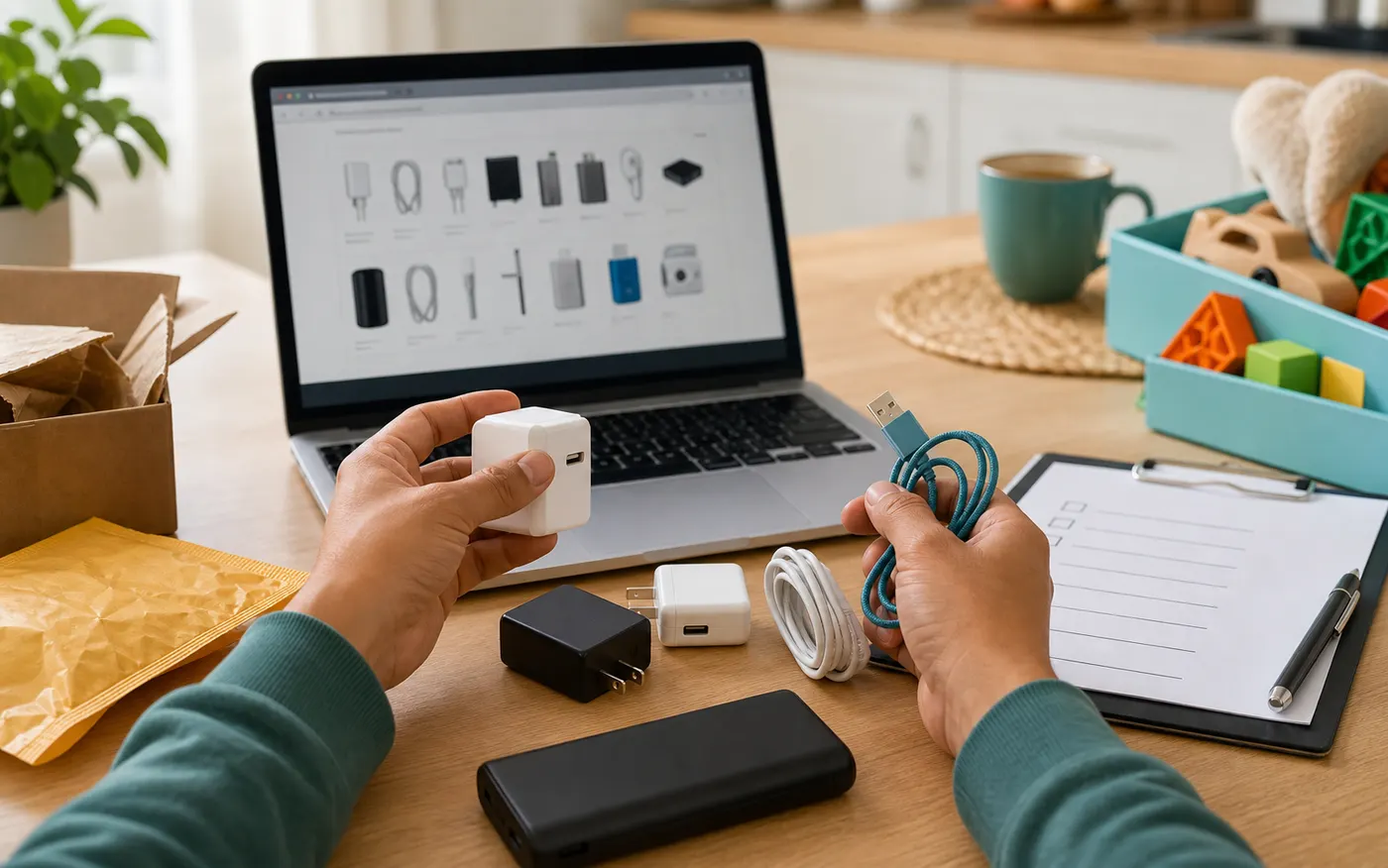
The Temu EU fine is a platform regulation story, but it is also a plain shopping story. On May 28, 2026, the European Commission said it fined Temu 200 million euros under the Digital Services Act because the company failed to adequately assess risks from illegal products offered on its marketplace and the possible harm to consumers in the European Union.
The Commission's announcement was specific about the types of concerns it found. It said evidence from a mystery-shopping exercise showed a very high percentage of selected chargers failed basic safety tests, while a high percentage of tested baby toys created medium to high safety risks because of chemical-limit problems or detachable parts that could create suffocation hazards.
Temu disagreed with the decision, the Associated Press reported. AP said the company called the fine disproportionate and said the decision related to an earlier DSA evaluation rather than the current state of its systems.
What did the EU fine Temu for?
The European Commission did not say every Temu item is unsafe. The fine is about Temu's obligations as a very large online platform under the Digital Services Act, known as the DSA.
Under that law, major platforms must look closely at systemic risks connected to their services. In this case, the Commission said Temu's 2024 risk assessment was too general, relied too heavily on broad e-commerce risks, and did not use enough evidence specific to Temu's own service.
The Commission also said Temu underestimated how often EU consumers could encounter illegal items and did not properly assess how its recommender systems, product-promotion programs, and affiliated influencers could amplify those risks.
What is the Digital Services Act?
The Digital Services Act is the European Union's rulebook for digital platforms, marketplaces, search engines, and other online services. For the largest platforms, the DSA goes beyond removing individual illegal listings after they are reported. It asks platforms to study how their systems can create or spread risk at scale.
For an online marketplace, that means regulators are looking at more than a single product page. They can look at whether the marketplace understands which categories are risky, whether it uses reliable evidence, whether product recommendations make risky items more visible, and whether the platform has a serious plan to reduce harm.
That is why this fine matters even to people who never shop in the EU. It shows how regulators are starting to treat marketplace safety as a systems problem, not just a bad-listing problem.
What products were mentioned?
The Commission's short public summary highlighted two categories from its mystery-shopping evidence: electronic device chargers and baby toys. Those categories matter because low prices can hide real safety questions.
Chargers, batteries, and powered accessories can create fire or shock risks if they are poorly made, mislabeled, or paired with the wrong device. Baby and children's products carry extra concern because small parts, chemicals, cords, magnets, batteries, and weak construction can create hazards that are not obvious from a thumbnail image.
The Commission did not publish a shopper-facing list of every item it tested in the public summary. That means consumers should avoid jumping from the fine to a claim that one specific listing is unsafe unless a regulator, recall page, or the platform itself identifies that product.
Does this affect U.S. shoppers?
The fine was issued by EU regulators under EU law. It does not automatically change U.S. product rules or create a U.S. recall.
Still, the shopper lesson travels well. Many online marketplaces connect buyers with large numbers of third-party sellers, importers, resellers, and low-cost brands. A professional-looking listing, a high star rating, or a discount label does not by itself prove that a product is safe, tested, or easy to return.
The U.S. Consumer Product Safety Commission says U.S. product safety laws apply to products sold online, including products sold by original manufacturers, importers, and secondhand sellers. The FTC also tells online shoppers to check sellers and products, read reviews carefully, understand return policies, and keep purchase records.
How shoppers can check marketplace products before buying
For low-risk items, a quick price comparison may be enough. For products that plug in, charge batteries, go near children, touch skin, hold food, or carry weight, slow down and check a few things first.
- Look for a real seller identity. Check who is selling the item, where the seller is located, whether there is a reachable customer-service path, and whether the same seller has a history outside one listing.
- Read the full description, not just the headline. Look for model numbers, materials, size details, age ranges, voltage information, included parts, and warnings.
- Be careful with generic safety claims. A badge, icon, or phrase in a product image is not the same as a verifiable certification, test report, or regulator notice.
- Search outside the marketplace. Use the product name, seller name, or model number with words like "recall," "complaint," "fire," "choking," or "scam."
- Check return terms before buying. Know who pays return shipping, how long the return window lasts, and whether clearance or sale items are treated differently.
- Keep records. Save the order confirmation, listing screenshot, seller name, promised delivery date, and any messages in case the item arrives damaged, unsafe, or different from the listing.
Extra caution for chargers, batteries, and toys
The EU case specifically mentioned chargers and baby toys, so those categories deserve extra attention.
For chargers and electronics accessories, avoid mystery items with no clear manufacturer, no useful model number, poor translations, or exaggerated compatibility claims. Match chargers to the device maker's requirements, avoid damaged cables, and stop using any charger that gets unusually hot, sparks, smells burnt, or fails to fit securely.
For toys, check the intended age range, small-parts warnings, battery compartments, magnets, cords, detachable pieces, and material claims. For babies and toddlers, avoid relying only on cute product photos. Small pieces and weak construction can matter more than the design.
For any category, search CPSC recalls before using a product if something looks off. If a product appears dangerous, stop using it and report the issue to the seller, the marketplace, and the appropriate safety regulator.
What the fine does not mean
The fine does not mean every Temu purchase is unsafe. It also does not mean shoppers should treat every cheap product as a scam. Low prices can come from many things: direct sourcing, cheaper materials, lower marketing costs, smaller margins, slower shipping, or aggressive promotion.
The fine does mean regulators found a serious gap in how Temu assessed platform-level risk in Europe. For shoppers, that is a reminder to separate price from proof. A low price is useful only if the product is appropriate, accurately described, safely made, and returnable if something goes wrong.
What happens next?
AP reported that Temu has until the end of August to submit an action plan to remedy the problem and could face additional fines if it fails to comply. The Commission's decision also keeps pressure on other large marketplaces because regulators are showing that risk assessments need to be evidence-based and specific to the platform, not generic paperwork.
For consumers, the next thing to watch is whether marketplaces make safety information easier to find before checkout: clearer seller identity, better recall handling, more useful product documentation, stronger reporting tools, and fewer listings that rely on vague claims.
FAQ
How much was the Temu EU fine?
The European Commission said it fined Temu 200 million euros under the Digital Services Act.
Why did the EU fine Temu?
The Commission said Temu failed to properly identify, analyze, and assess systemic risks connected to illegal products being offered on its platform and the resulting harm to EU consumers.
Did Temu agree with the decision?
No. AP reported that Temu disagreed with the decision, considered the fine disproportionate, and said it had taken further steps to strengthen risk assessment and user protection.
Does the EU fine create a U.S. recall?
No. The EU fine is a European regulatory action under the Digital Services Act. U.S. shoppers should still check CPSC recall information and marketplace notices for specific products.
What should shoppers check first?
Start with the seller identity, full product description, model number, return policy, outside reviews, recall searches, and whether safety claims are specific and verifiable.
Sources
- European Commission: Commission fines Temu 200 million euros for breaching the Digital Services Act
- Associated Press: Chinese online retailer Temu hit with $232 million fine over unsafe toys and electronics
- Federal Trade Commission: Online Shopping
- U.S. Consumer Product Safety Commission: Online Sellers' Safety Guide
- U.S. Consumer Product Safety Commission: Stopping the Online Sale of Recalled Products