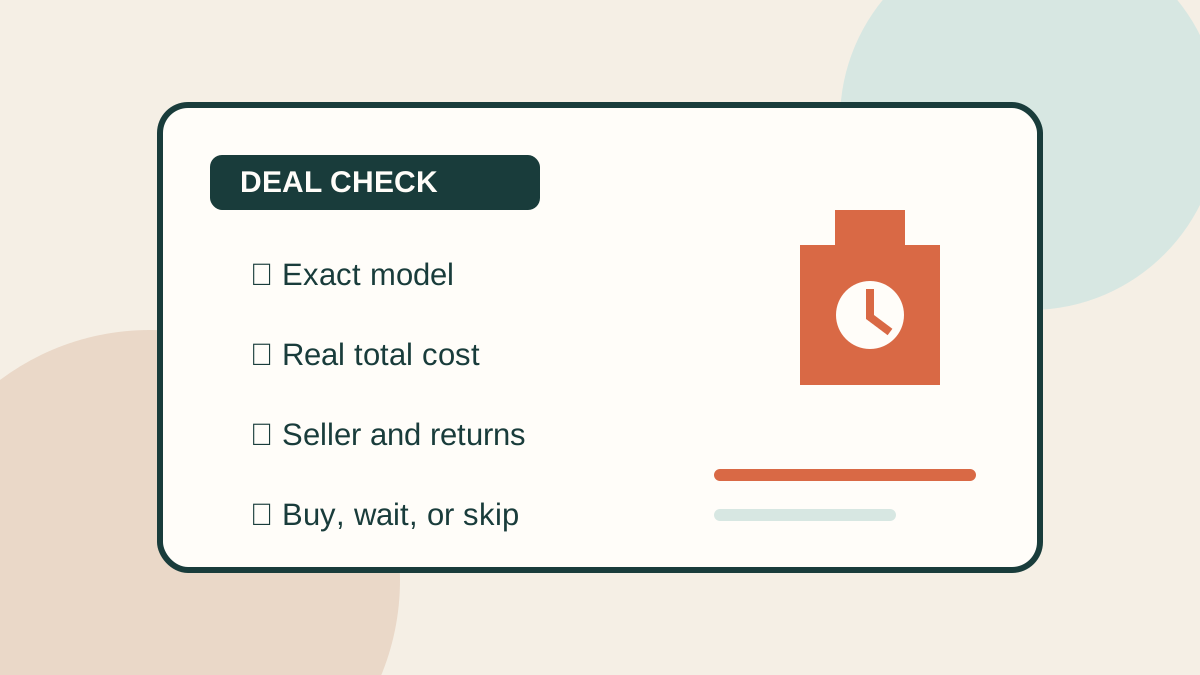
1. Write down the exact product before comparing prices
A product name is often too vague. Record the manufacturer, model number, storage size, color, generation, and whether the item is new, refurbished, open-box, or used. The same product family can include several versions with different processors, accessories, warranties, or storage.
The FTC recommends comparison shopping by model number and by the details that affect the final price, including shipping, handling, delivery, taxes, and other fees.[1] That matters during a sale because a large percentage discount can hide a smaller storage tier or a seller with expensive shipping.
For phones, tablets, laptops, headphones, and streaming devices, copy the model number into a note before opening another retailer's page. Compare the note, not the marketing name.
2. Treat the “was” price as a clue, not proof
A sale tag tells you what a retailer wants you to notice. It does not tell you whether the current price is the lowest you will see this season. Consumer Reports' early holiday coverage shows why timing matters: some products were already discounted, while other deals had been cheaper during an earlier event or might fall again nearer to Black Friday.[2][3]
Use a price tracker or a reputable comparison site when one is available. Check at least two sellers for the same model and look at the price history if the tool provides it. Keep the product configuration identical. Comparing a 128GB tablet with a 256GB version creates a fake bargain.
A useful question is: “Would I be comfortable paying this price if the product never gets cheaper?” If the answer is no, add it to a watchlist instead of buying from fear of missing out.
3. Check who is actually selling it
A familiar marketplace may host third-party sellers with different return rules, warranties, shipping times, and customer support. The FTC advises shoppers to review the marketplace's protections, the individual seller's terms, and the deadline for getting help if something goes wrong.[5]
Look for the seller name near the price and confirm whether the retailer or a marketplace vendor is responsible for fulfillment. Be wary of a product that is dramatically cheaper than the same model elsewhere, especially if the listing uses stock photos, vague condition language, or a seller with little history.
Do not move the transaction outside the marketplace because a seller promises an extra discount. That can remove the platform's buyer protections.[5]
4. Read the return policy for sale items
A deal is not useful if you cannot return the product when it arrives damaged, incompatible, or different from the listing. Check the return window before ordering, including whether the clock starts at purchase or delivery. Look for restocking fees, return shipping charges, exclusions for opened electronics, and different rules for clearance or marketplace items.
The FTC says sellers should explain whether a full refund is available and who pays return shipping. It also warns that sale items can have different return policies.[1] Save a copy of the policy and your order confirmation. The page may change after the sale ends.
For gifts, check the holiday return extension and its cutoff date. A longer return window can matter more than a small additional discount.
5. Add the costs that appear after checkout
Calculate the price you will really pay. Include sales tax, shipping, required accessories, a subscription, a protection plan, storage, replacement parts, or a carrier activation requirement. A cheap smart-home device may require a paid service for the features you actually want. A discounted printer may make up the difference through expensive ink.
Do not count an optional warranty as a benefit until you have read its exclusions and deductible. Do not count store credit as a cash refund. If the product only makes sense after adding several extras, compare the complete setup with a more expensive product that includes them.
Buy now, wait, or skip?
Buy now when the exact model fits your needs, the total price is good compared with recent prices, the return policy works for you, and you would keep the item even if another sale appears next week.
Wait when you want the product but the price is only moderately better, the holiday return policy is unclear, or you are still comparing configurations. Add a price alert and set a personal target price.
Skip when the listing hides the model number, the seller wants an unsafe payment method, the discount depends on a subscription you do not want, or the return terms are too restrictive. The FTC says to avoid sellers that insist on gift cards, wire transfers, payment apps, or cryptocurrency because those methods make it harder to recover money.[1]
Keep a small purchase record
Save the product page, seller name, price, shipping promise, return policy, order confirmation, and payment record. If the item does not arrive or is not what you ordered, those records help you contact the seller and, when appropriate, dispute a credit-card charge. The FTC recommends keeping these details after an online purchase.[1]
The best early Black Friday deal is not the loudest discount. It is the purchase whose model, seller, total cost, and return terms still make sense after the sale banner disappears.
Sources
- FTC, Online Shopping, checked November 2, 2026.
- Consumer Reports, Our 8 Favorite Early Black Friday Deals, checked November 2, 2026.
- Consumer Reports, Best Early Black Friday Deals on Tech, checked November 2, 2026.
- FTC, Buying From an Online Marketplace, checked November 2, 2026.